
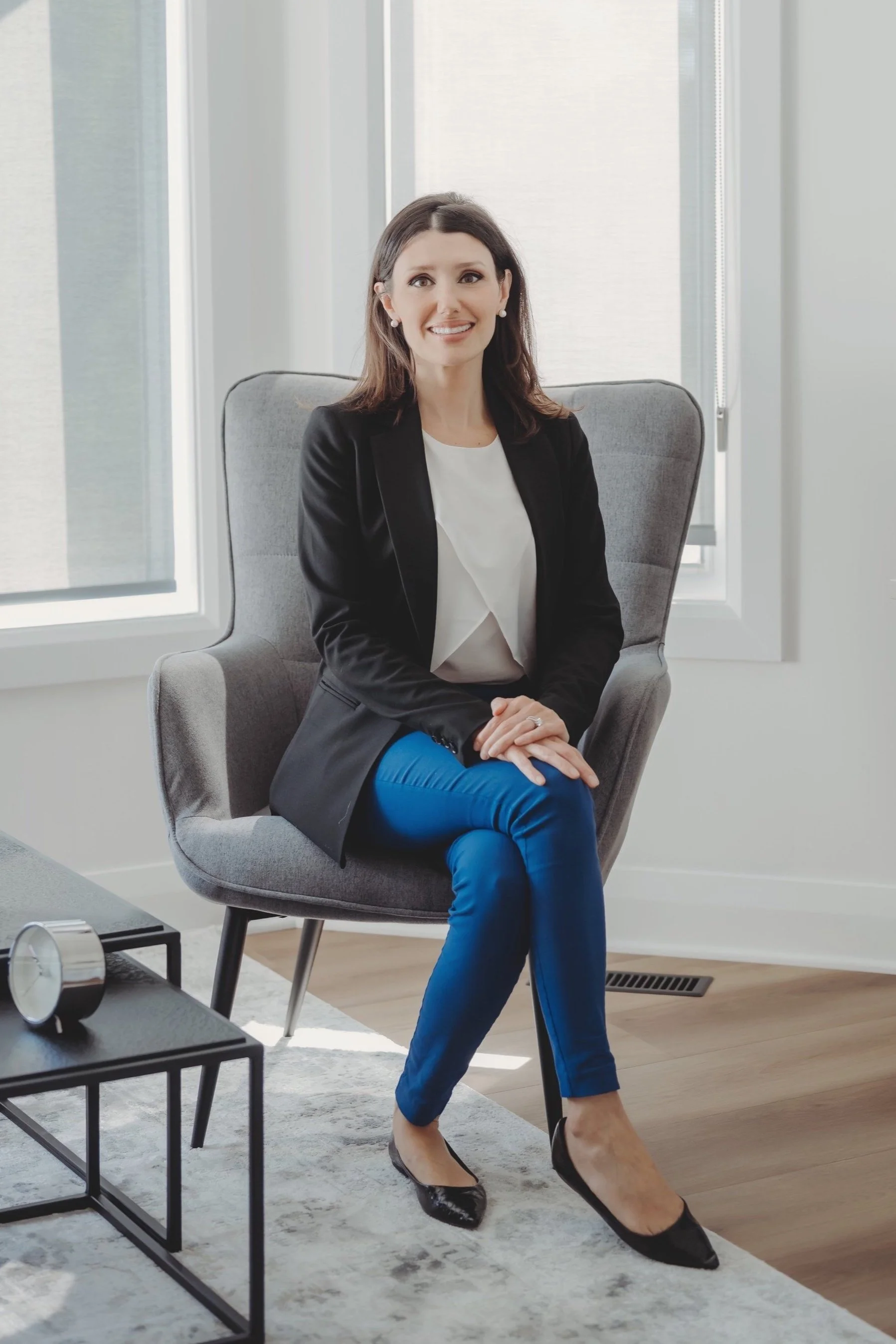
Dr. Mary Simmering McDonald, Ph.D. C.Psych.
Clinical Psychologist
Office hours: Monday to Friday, 9:15 am - 2:15 pm.
I am a Doctoral Clinical Child Psychologist who provides therapy and assessment services to children, adolescents, and their families. I am also the co-host of The Coping Toolbox, a Child Psych Podcast, which can be found here.
I work with individuals who are experiencing a variety of challenges including:
Mood and Anxiety Disorders
Obsessive Compulsive Disorder
Developmental Delay/Intellectual Disability
Attention-Deficit/Hyperactivity Disorder (ADHD)
Autism Spectrum
Behaviour and emotion regulation difficulties
Self-harming behaviours
Learning Disorders
Eating Disorders
Social relationship difficulties
Development of coping strategies
Adjusting to life events or stressors
Support of emotional functioning and well-being
Assessments (psychoeducational, gifted, and developmental assessments)
I obtained my Master’s of Arts (M.A.) and Doctor of Philosophy (Ph.D.) degrees in Child Clinical Psychology from the University of Windsor, a program accredited by the Canadian Psychological Association (CPA). My graduate research was funded by provincial and federal scholarships, and I have co-authored publications in the areas of computer-mediated communication (e.g., Facebook), online partner aggression, adaptive and maladaptive coping, and help-seeking behaviours.
I have worked with children, adolescents, and their families across a variety of clinical settings, including community child and youth mental health centres, university clinics, sexual assault crisis centres, a pre-school for autistic children, schools, and hospitals. In addition, I completed my CPA-accredited pre-doctoral residency at the Children’s Hospital of Eastern Ontario (CHEO), where I completed rotations focused on developmental disorders, eating disorders, individual and family therapy, neuropsychological assessment, and crisis assessment.
My approach to case conceptualization and intervention is based on a Developmental Psychopathology framework, which considers the biological, psychological, social, and systemic factors that contribute to a client’s presentation. My main theoretical orientation is best described as Integrative, in that I use evidence-based strategies and techniques from different theoretical perspectives (e.g., Cognitive Behavioural Therapy and Compassion-Focused CBT, Dialectical Behaviour Therapy, Acceptance and Commitment Therapy, and Motivational Interviewing) to fit the unique needs of my clients. I seek to provide a warm, supportive, and collaborative environment to help individuals, parents, and families feel empowered to build on their strengths to cope with presenting challenges.
In addition to clinical work, I have been involved in program development, research, and the training and supervision of clinical psychology graduate students. I continue to further my knowledge and training by seeking out regular continuing education opportunities as well as reviewing current research and clinical literature.